When it’s time to restore your flat or low-slope roof in San Diego, you’ve likely heard about protective coatings. The choice often comes down to two major players: silicone and acrylic. Each offers unique benefits and drawbacks, especially concerning how long they’ll protect your investment under the Southern California sun.
What roof coatings actually do (and don’t do)
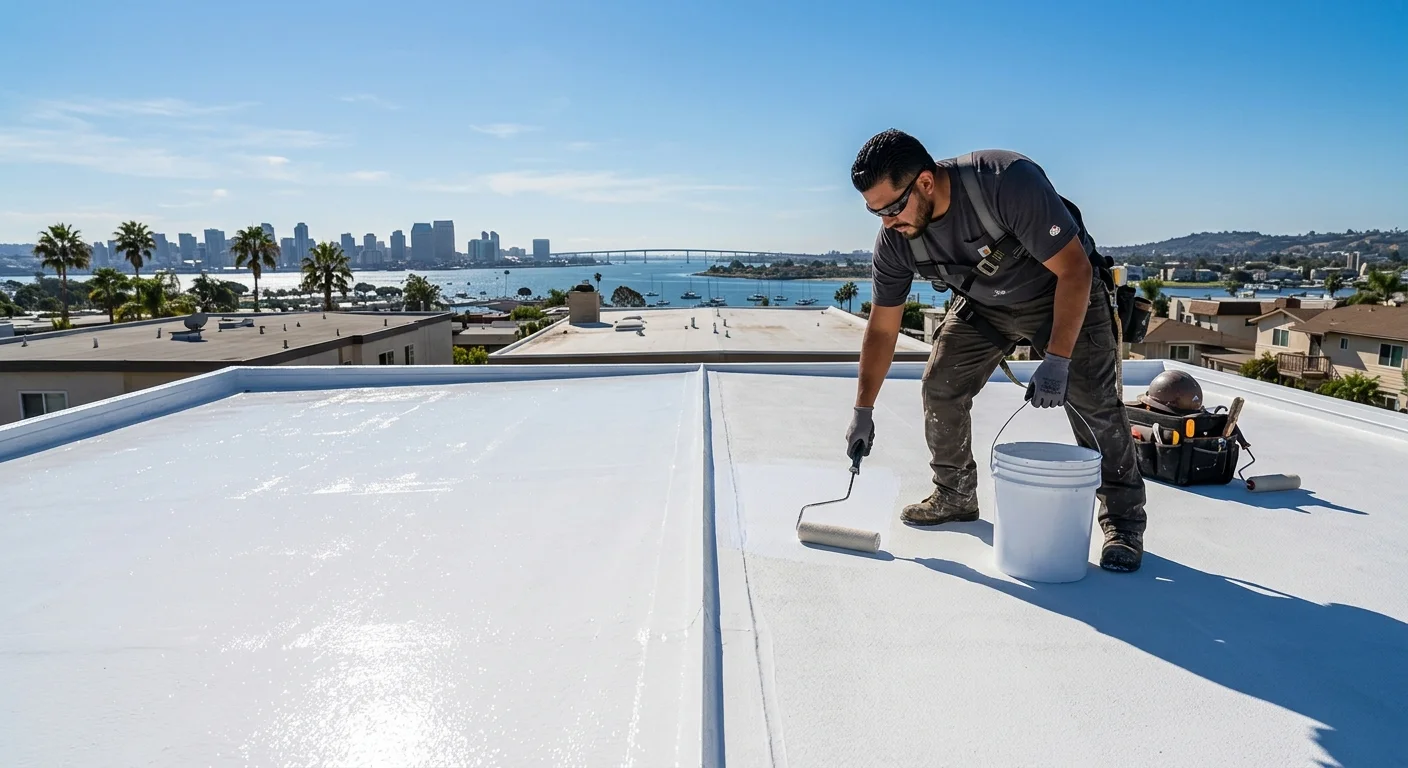
Roof coatings, often referred to as “elastomeric roof coatings,” are specialized liquid-applied membranes designed to significantly extend the life of an existing roof. They create a seamless, protective layer that tackles several common roofing issues simultaneously. Their primary functions include waterproofing, which is crucial for preventing leaks, and enhancing energy efficiency by reflecting sunlight. This reflective quality, known as ‘cool roof’ technology, can dramatically lower internal building temperatures and reduce air conditioning costs, a major benefit in San Diego’s sunny climate.
However, it’s important to understand what a roof coating doesn’t do. A coating is a restoration solution, not a replacement. It won’t magically repair a structurally compromised roof, severe decking damage, or widespread material failure. The existing roof surface needs to be relatively sound and stable. Coatings are ideal for roofs that are showing signs of age, minor wear, small leaks, or simply need an energy performance upgrade. Applying a coating to a severely deteriorated roof is like painting over rot; it’s a temporary cosmetic fix at best, and won’t address the underlying issues.
For commercial buildings and structures with flat and low-slope roofing, these coatings are particularly valuable. They offer a cost-effective alternative to a full roof tear-off and replacement, which can be disruptive to business operations and significantly more expensive. The goal of a quality roof coating system is to defer that major expense by 10 to 20 years, depending on the type of coating and the quality of application. It’s a strategic investment in prolonging your roof’s service life, protecting your assets, and improving your building’s thermal performance against the intense UV radiation common in San Diego County.
Silicone: ponding-water tolerant, UV-stable, premium price
Silicone roof coatings stand out as a premium option, particularly known for their exceptional durability and performance in challenging conditions. One of their most significant advantages is their complete tolerance to ponding water. Unlike some other coatings, silicone won’t degrade, soften, or lose adhesion even when water sits on the roof surface for extended periods. This makes it an excellent choice for flat roofs with ponding water issues, a common concern in some San Diego properties after heavy rain or due to minor drainage imperfections.
Beyond water resistance, silicone is remarkably UV-stable. It doesn’t chalk, crack, or become brittle under the intense San Diego sun, maintaining its flexibility and reflective properties throughout its lifespan. This means its “cool roof” benefits, which contribute to energy savings, remain consistent for many years. Silicone coatings typically come in a bright white finish, reflecting up to 90% of the sun’s rays. Application is generally a single-coat process after proper cleaning and priming, which can simplify installation.
The drawbacks? Price is a primary factor. Silicone coatings usually have a higher initial material cost compared to acrylics. They also require very specific surface preparation; the roof must be meticulously clean and completely dry before application to ensure proper adhesion. Any moisture present can lead to blistering or adhesion issues. While durable, they can sometimes be more prone to dirt pickup, which may slightly reduce their reflectivity over time if not periodically cleaned, though their performance remains largely unaffected. Despite the higher upfront investment, the extended lifespan and superior performance often make silicone a very cost-effective choice over the long term for commercial roofing applications.
Acrylic: budget-friendly, breathable, but rain-sensitive while curing
Acrylic roof coatings offer a more budget-friendly entry point into roof restoration. They are water-based, making them environmentally friendly and easier to clean up during installation. Acrylics are also highly reflective, providing excellent “cool roof” benefits similar to silicone, initially reflecting a significant amount of solar radiation. They are breathable, meaning they allow moisture vapor to escape from the roof substrate, which can be beneficial in certain situations where trapped moisture is a concern. This permeability helps prevent blistering from within the roof system.
However, acrylics have some distinct limitations, primarily their sensitivity to water during the curing process. Because they are water-based, uncured acrylic coatings can be washed away or damaged by rain. This means installation requires a stretch of dry weather, which is usually predictable in San Diego’s climate, but still a consideration. While cured acrylics are waterproof, they are not ideal for areas with persistent ponding water. Prolonged submersion can lead to softening, blistering, or even delamination over time, shortening the coating’s effective lifespan.
Acrylics also tend to degrade more significantly under intense UV radiation compared to silicone. Over many years, they can become brittle, chalk, and lose some of their elasticity and reflectivity. This chalking effect reduces their aesthetic appeal and slightly diminishes their energy-saving properties. To combat this, acrylic systems often require two or more coats to achieve the desired thickness and durability, increasing labor costs during installation. Despite these factors, for roofs with good drainage and where budget is a primary concern, acrylics remain a viable and popular choice, delivering significant performance improvements over an uncoated roof.
Cost per square foot installed in San Diego
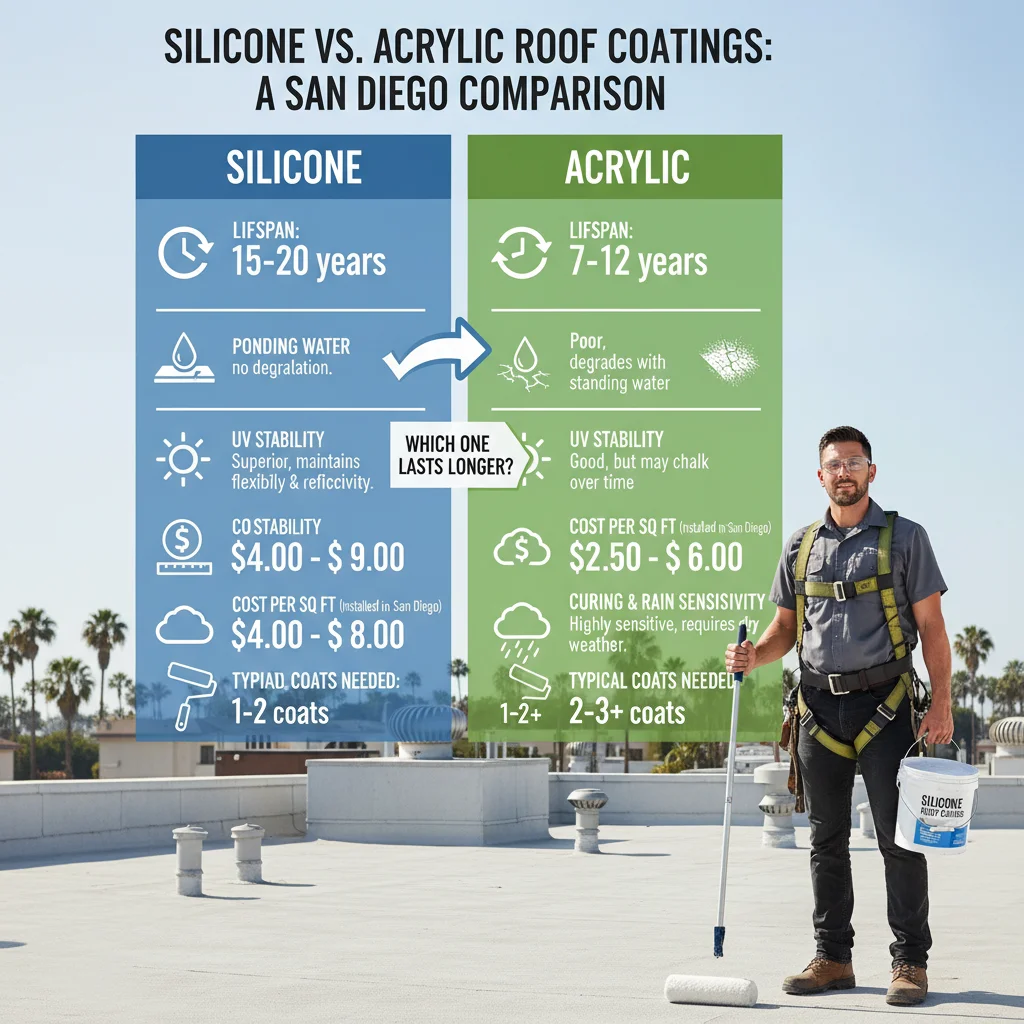
Understanding the cost of roof coatings in San Diego involves more than just the material price; it includes labor, preparation, and the specific condition of your existing roof. Generally, prices for roof coating installations can vary significantly based on the contractor, the product brand, the roof’s complexity, and the extent of any necessary repairs before coating. As a rough guide, San Diego property owners can expect to pay anywhere from $2.50 to $6.00 per square foot for an installed acrylic coating system. This usually includes cleaning, minor repairs, priming, and the application of two or more acrylic coats.
Silicone coatings, due to their premium material costs and often specialized application requirements, typically fall into a higher price range. For a complete silicone system, you might see costs ranging from $4.00 to $9.00 per square foot installed. This price accounts for the thorough cleaning, precise priming, and usually a single, thicker application of the silicone material. While the per-square-foot cost is higher upfront, the extended lifespan and superior ponding water resistance of silicone can lead to a lower total cost of ownership over the long run, especially for commercial roofing where performance and longevity are paramount.
These figures are estimates for an average flat or low-slope roof in good enough condition for coating. If your roof requires extensive repairs – like patch work, seam reinforcement, or significant cleaning – those costs will add to the overall project. It’s always best to get a detailed, on-site estimate from a licensed San Diego roofing contractor. They’ll assess your specific roof, recommend the best coating, and provide an accurate quote. Remember, a lower upfront cost doesn’t always mean a better value if the coating fails prematurely or doesn’t meet your roof’s specific needs.
Which one’s right for your flat or low-slope roof
Deciding between silicone and acrylic comes down to your roof’s specific characteristics, your budget, and your long-term goals. If your San Diego property has a flat roof with poor drainage, where ponding water is a recurring problem, silicone is almost always the superior choice. Its unparalleled resistance to standing water means you won’t have to worry about the coating degrading. If you’re looking for the longest possible lifespan from your coating and are willing to invest more upfront for premium performance and peace of mind, silicone is also the clear winner. It offers robust UV stability and maintains its reflectivity and elasticity for decades.
On the other hand, if your flat or low-slope roof has excellent drainage, minimizing any standing water, and your budget is a significant concern, acrylic can be a very effective solution. It provides excellent initial reflectivity for energy savings and is a more eco-friendly, water-based product. Acrylics are well-suited for situations where you need a good quality, protective coating at a more accessible price point, and you can ensure a dry application period. They are a solid choice for extending the life of your roof, provided the conditions are right.
Ultimately, the best way to make this decision for your San Diego property is to consult with experienced flat and low-slope roofing professionals. We can inspect your existing roof, evaluate its condition, assess drainage patterns, discuss your budget, and recommend the ideal coating system that will perform best for your unique situation. Our expertise ensures you get a durable, energy-efficient solution tailored to the San Diego climate.
When to call us
Choosing and applying the correct roof coating requires specialized knowledge and equipment. From meticulous surface preparation to precise application techniques, professional installation ensures your coating performs as expected and delivers its full lifespan. Don’t risk compromising your roof’s integrity with a DIY job. Call us at (858) 925-5546 for a same-day estimate.